

How does jelly fuel's flame look like?
Jul 01, 2025
Hey there! As a jelly fuel supplier, I often get asked, "How does jelly fuel's flame look like?" Well, let me tell you all about it.
First off, jelly fuel is pretty cool stuff. It's a type of fuel that comes in a gel - like consistency, which makes it different from your regular liquid or solid fuels. And its flame has some unique characteristics that set it apart.
The Appearance of Jelly Fuel Flame
When you light jelly fuel, the first thing you'll notice is that the flame is relatively stable. Unlike some liquid fuels that can sputter and flicker wildly, jelly fuel burns in a more controlled manner. The flame usually has a nice, even shape. It can be kind of cone - shaped, with a bright core in the middle and a softer, more diffused outer layer.
The color of the flame is also quite interesting. In most cases, the base color of the jelly fuel flame is a bright blue at the bottom near the fuel source. This blue part is where the combustion is most efficient, and it indicates that the fuel is burning cleanly. As you move up the flame, it often transitions to a yellow - orange color. This yellow - orange part is due to the presence of incomplete combustion products and the incandescence of small particles in the flame.
The size of the flame can vary depending on a few factors. If you're using a small amount of jelly fuel, say in a little chafing dish for a small event, the flame will be relatively small and gentle. It'll provide just enough heat to keep your food warm without being too overpowering. On the other hand, if you're using a larger quantity of jelly fuel, like in a big outdoor heating setup, the flame can be quite large and more intense.
Comparing Different Types of Jelly Fuel Flames
We offer different types of jelly fuel products, and each one has a slightly different flame characteristic.
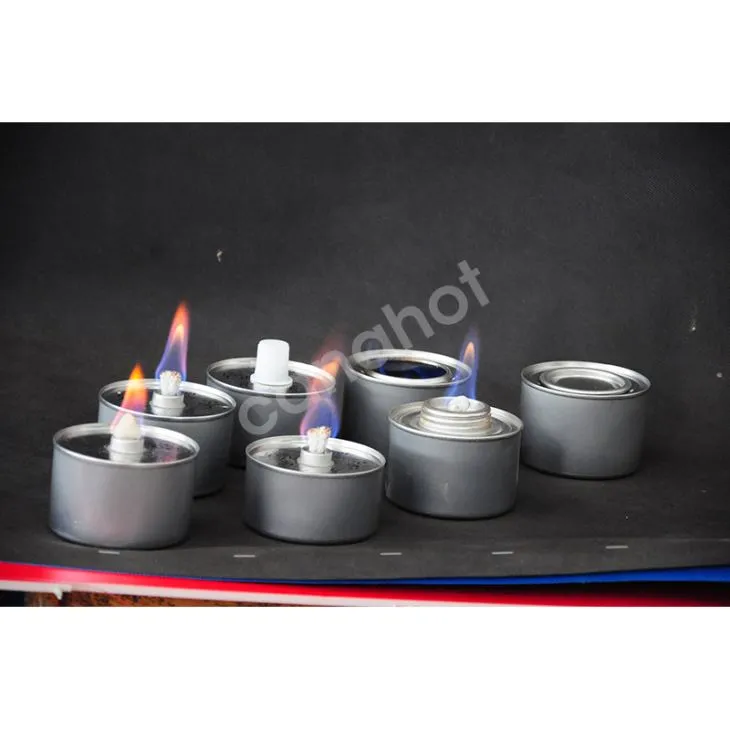

Methanol Solid Gel Chafing Fuel With High Engrgy Output
Take our Methanol Solid Gel Chafing Fuel With High Engrgy Output for example. This fuel is designed for high - energy output, so its flame is very bright and intense. The blue part at the base is more prominent, and it gives off a lot of heat. It's great for commercial chafing dishes where you need to keep a large amount of food hot for an extended period. The high - energy output also means that the flame burns steadily for a long time, which is super convenient for event organizers.
Outdoor Gel Chafing Fuel 200G Iron Can
Our Outdoor Gel Chafing Fuel 200G Iron Can is perfect for outdoor use. The flame from this fuel is a bit more spread out compared to some other types. It's designed to withstand outdoor conditions like wind, so the flame is more resistant to being blown out. The color is still a nice mix of blue and yellow - orange, and it provides a good amount of heat for outdoor picnics, barbecues, or small outdoor gatherings.
Lasting Gel Fuel Cans
The Lasting Gel Fuel Cans are known for their long - burning time. The flame from these cans is consistent and steady throughout the burning process. It doesn't flicker or go out easily, and it maintains a good balance between the blue and yellow - orange colors. This makes it ideal for situations where you need a reliable heat source over a long period, like in a restaurant's buffet area.
The Science Behind the Flame
To understand why jelly fuel burns the way it does, we need to look at the science of combustion. Jelly fuel typically contains a combustible substance, like methanol or ethanol, along with a gelling agent. When you light the fuel, the heat from the ignition source starts to vaporize the combustible substance.
The vaporized fuel then mixes with oxygen in the air. In the blue part of the flame, there's enough oxygen for complete combustion to occur. This is why it's so efficient and produces little in the way of pollutants. The yellow - orange part, however, has less oxygen available, so the combustion is incomplete. This leads to the formation of carbon particles that glow and give the flame its characteristic color.
Safety and the Flame
One of the great things about jelly fuel is that it's relatively safe to use. The gel - like consistency makes it less likely to spill compared to liquid fuels. And because the flame is more controlled, there's less risk of accidental fires spreading quickly.
However, it's still important to follow some safety guidelines. Always use jelly fuel in a well - ventilated area. This is because the combustion process produces carbon dioxide and other gases, and you don't want them to build up in an enclosed space. Also, make sure to keep the fuel away from flammable materials and never try to re - light a fuel that has already gone out without following the proper procedures.
Using Jelly Fuel for Different Purposes
Jelly fuel has a wide range of uses. In the food service industry, it's commonly used in chafing dishes to keep food warm. The steady flame and controllable heat make it perfect for this application. You can set up a buffet with multiple chafing dishes, each powered by jelly fuel, and be confident that your food will stay at the right temperature.
For outdoor activities, jelly fuel is a great choice for heating. Whether you're camping, having a backyard party, or just enjoying a cold evening outside, a jelly fuel heater can provide a nice, cozy warmth. The flames add a bit of ambiance too, making your outdoor experience even more enjoyable.
Conclusion
So, there you have it! That's how jelly fuel's flame looks like. It's a beautiful combination of blue and yellow - orange, with a stable and controllable burn. Whether you need a high - energy flame for a commercial setting or a gentle, long - lasting flame for an outdoor gathering, our jelly fuel products have got you covered.
If you're interested in purchasing jelly fuel for your business or personal use, we'd love to talk to you. We can discuss your specific needs and help you choose the right product. Just reach out to us, and let's start the conversation about how our jelly fuel can meet your requirements.
References
- Principles of Combustion by Kenneth K. Kuo
- Introduction to Thermal and Fluid Engineering by Frank P. Incropera and David P. DeWitt