

What is the melting point of jelly fuel?
Oct 17, 2025
Jelly fuel, also known as gel fuel, has gained significant popularity in various applications, from camping stoves to chafing dishes in the hospitality industry. As a supplier of high - quality jelly fuel, I often receive inquiries about its melting point. Understanding the melting point of jelly fuel is crucial for both its proper storage and effective use.
What is Jelly Fuel?
Jelly fuel is a type of fuel that has a gel - like consistency. It is typically made by adding a gelling agent to a liquid fuel, such as alcohol (usually ethanol or methanol). This gelling process transforms the liquid fuel into a semi - solid state, which offers several advantages over traditional liquid fuels. For example, jelly fuel is less likely to spill, making it safer to handle and transport. It also burns more evenly and can be easily shaped or contained in specific containers.
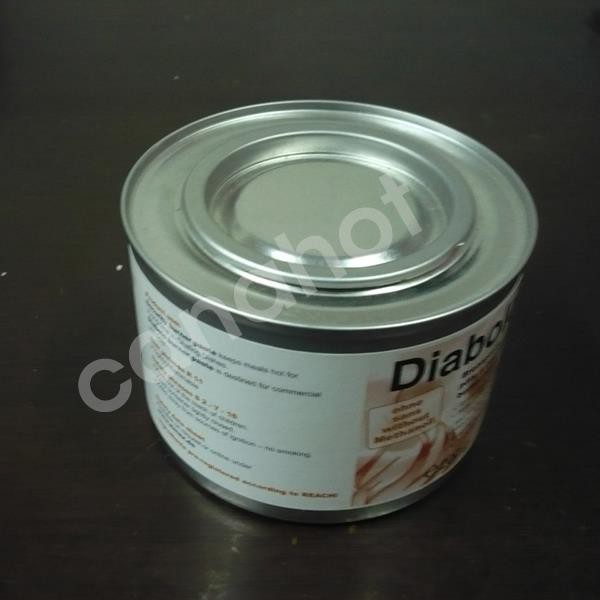

Factors Affecting the Melting Point of Jelly Fuel
The melting point of jelly fuel is not a fixed value and can vary depending on several factors:
Composition of the Fuel
The type of liquid fuel used is a primary factor. Ethanol - based jelly fuels generally have different melting characteristics compared to methanol - based ones. Ethanol has a lower boiling point (78.37 °C) than methanol (64.7 °C), which can influence the melting point of the gel. Additionally, the concentration of the alcohol in the gel and the type of gelling agent used play important roles. Different gelling agents have different melting points and interactions with the fuel, which can either raise or lower the overall melting point of the jelly fuel.
Additives and Impurities
Some jelly fuels may contain additives for various purposes, such as enhancing the burning rate, improving the odor, or increasing the stability of the gel. These additives can affect the melting point. For instance, if an additive has a high melting point, it may increase the overall melting point of the jelly fuel. Impurities in the fuel, whether introduced during the manufacturing process or from external sources, can also have an impact on the melting behavior.
External Pressure
Although the effect of external pressure on the melting point of jelly fuel is relatively small compared to other factors, it still exists. According to the principles of thermodynamics, an increase in pressure generally raises the melting point of substances. However, in most practical applications of jelly fuel, the pressure variations are minimal, so this factor is often negligible.
Typical Melting Point Range
In general, the melting point of common ethanol - based jelly fuels used in chafing dishes and small heating devices ranges from approximately 40 °C to 60 °C. Methanol - based jelly fuels may have slightly lower melting points, usually in the range of 30 °C to 50 °C. These ranges are approximate and can vary based on the specific formulation of the jelly fuel.
Importance of Knowing the Melting Point
Storage
Knowing the melting point of jelly fuel is essential for proper storage. If the storage temperature exceeds the melting point, the jelly fuel can turn into a liquid state, which may lead to leakage and potential safety hazards. For example, if a container of jelly fuel melts and leaks in a storage area, it can create a fire risk. Therefore, it is recommended to store jelly fuel in a cool, dry place where the temperature is well below its melting point.
Use
During use, understanding the melting point helps ensure optimal performance. For example, in a chafing dish application, if the heat source is too intense and causes the jelly fuel to melt too quickly, it may result in uneven burning and a shorter burn time. On the other hand, if the heat is too low and the jelly fuel does not reach its melting point efficiently, the burning process may be incomplete.
Our Jelly Fuel Products
As a leading supplier of jelly fuel, we offer a wide range of high - quality products to meet different customer needs. Our Solid Alcohol Fuel Tank is designed with safety and convenience in mind. It provides a stable and long - lasting heat source for various applications.
Our Ethanol Solid Gel Chafing Fuel, enviromental.green Product is an environmentally friendly option. It is made from high - purity ethanol and a non - toxic gelling agent, ensuring clean and efficient burning. This product is particularly suitable for use in restaurants and catering services where environmental concerns are important.
We also offer Reusable Canned 2h/3h Gel Alcohol Paste/methanol Fuel, Smokeless, Odorless and Non - toxic Fuel. This product is designed for long - term use and provides a consistent heat output. The reusable cans are not only cost - effective but also reduce waste.
Contact Us for Procurement
If you are interested in our jelly fuel products or have any questions about the melting point or other aspects of jelly fuel, we encourage you to contact us for procurement discussions. We have a team of experts who can provide you with detailed information and help you choose the most suitable product for your needs. Whether you are a small business looking for a reliable fuel source for your chafing dishes or a large - scale camping equipment distributor, we are here to serve you.
References
- Atkins, P. W., & de Paula, J. (2014). Physical Chemistry. Oxford University Press.
- Perry, R. H., & Green, D. W. (1997). Perry's Chemical Engineers' Handbook. McGraw - Hill.